
If you have an irrigation system in Raleigh, you may receive a notice from Raleigh Water letting you know that your backflow preventer is due for testing. Don’t ignore it—backflow testing is required to help protect Raleigh’s public drinking water supply.
The good news is that the process is fairly straightforward. You need to have the backflow assembly tested by a City of Raleigh Certified Tester, and the passing test report must be submitted to Raleigh Water’s vendor, VEPO.
Why Does Raleigh Require Backflow Testing?
An irrigation system can potentially introduce contaminants such as fertilizers, pesticides or animal waste into the drinking water supply if water flows backward through the system.
A backflow preventer is designed to help stop that from happening. Because a backflow assembly is a mechanical device and can fail over time, Raleigh requires operational testing to verify that it is working properly. A visual inspection alone cannot determine whether the device is functioning correctly.
Will Raleigh Water Send You a Notice?
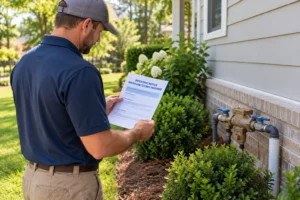 Yes. Raleigh Water says that customers with a testable backflow assembly receive an initial testing notice two months before the test due date.
For residential irrigation systems in Raleigh, the backflow assembly must have a passing operational test submitted every three years by July 1. Commercial irrigation systems must be tested annually by July 1.
So if you receive a notice, it’s a good idea to take care of the testing rather than putting it off.
What Should You Do After Receiving the Notice?
- Contact a Certified Backflow Tester
The City of Raleigh does not perform the testing itself. Instead, property owners are responsible for hiring a tester who is certified to test backflow assemblies within the Raleigh water service area. When choosing a company, make sure the tester is properly certified and, if needed, that the company is qualified to perform repairs if the assembly does not pass. - Have Your Backflow Preventer Tested
The tester performs an operational test using specialized equipment to determine whether the backflow assembly is functioning properly.
At Eco Irrigation, the process begins with diagnosing and testing the backflow preventer. If a problem is found, the team can recommend the necessary repairs or improvements. - Address Any Problems
What happens if the backflow preventer doesn’t pass? A failed assembly may need to be cleaned, repaired or replaced, depending on the problem. Raleigh Water requires a successful re-test after cleaning, repair or replacement, with the successful test submitted within 15 days. That’s one reason it can be helpful to choose a qualified tester who can also help identify and address problems with the assembly. - Make Sure the Test Report Is Submitted
Getting the backflow test performed is only part of the process. Raleigh Water considers the customer compliant once the assembly has been tested by a City of Raleigh Certified Tester and the passing operational test report has been submitted to the City’s designated vendor. Eco Irrigation helps with this part of the process by completing and filing the necessary paperwork for the applicable city.
What If You Haven’t Received a Notice?
Raleigh’s testing requirements still apply even if you haven’t recently received a notice.
Residential irrigation backflow assemblies are tested every three years, so not every homeowner will receive a notice every year. Raleigh Water also provides a schedule and certified-tester information for customers who need to determine their testing requirements.
If you’re unsure whether your irrigation backflow assembly is due for testing, you can contact Raleigh Water or consult with a certified tester.
Eco Irrigation Can Help
If you’ve received a Raleigh backflow testing notice, Eco Irrigation can help you take care of the process from testing through paperwork. Eco Irrigation provides backflow testing in Raleigh, Cary, Apex and Holly Springs. The company is a Certified Backflow Tester (License #COW0159) and is a North Carolina Restricted Limited Plumber (License #L.32705).
Out backflow testing process includes:
- Diagnosing and testing the backflow preventer
- Recommending necessary repairs or improvements
- Completing and filing the required forms
If you’ve received a notice—or simply aren’t sure whether your irrigation backflow preventer is due for testing—contact Eco Irrigation to schedule testing or get your existing backflow preventer certified.
What About Other Local Water Providers?
Raleigh is not the only local water provider that requires backflow testing. Other local water purveyors have similar cross-connection control programs and testing requirements, with many requiring backflow assemblies to be tested annually. While the specific testing schedules, deadlines and procedures can vary by water provider, the purpose is the same: to verify that backflow prevention devices are operating properly and help protect the public drinking water supply.
If you receive a backflow testing notice from your local water provider, be sure to follow that provider’s specific requirements and deadlines. A certified backflow tester can help you understand what is required and complete the testing and necessary paperwork.
